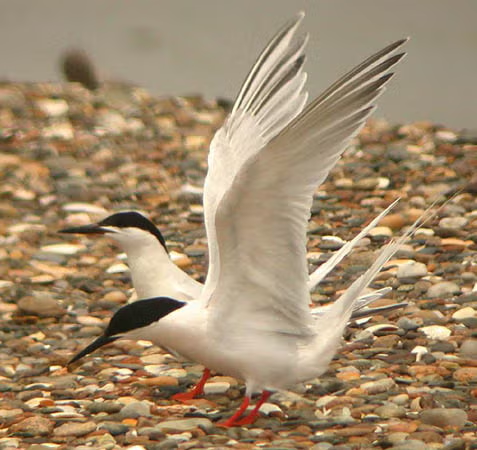
A small-medium tern, 33–36 cm (13–14 in) long with a 67–76 cm (26–30 in) wingspan
More than 90 percent of the Northeastern population is now limited to three major breeding colonies, Long Island hosts more than 2000 breeding pairs.
In the late 19th century, these birds were hunted for their plumes which were used to decorate hats.
More recently, their numbers have decreased in some regions due to increased competition and predation by large gulls, whose numbers have increased in recent times.
The East End has a high density of three types of ticks. the Blacklegged tick also known as the deer tick, the Lone Star tick and the American Dog Tick.
56% of ticks on Long Island and in Connecticut have tested positive for Lyme disease, with the East End having some of the highest rates
Due to the climate and, thick vegetation, and deer population, tick activity is high from March to November.
Piping plovers are small, endangered shorebirds, on Long Island’s sandy Atlantic beaches and barrier islands. They arrive in early spring and migrate south in September.
Roughly 200 breeding pairs rely on this habitat, necessitating protected nesting areas.
They are highly vulnerable to disturbance, due to laying their eggs in shallow open sand, often near dune grass, and rely on camouflage for protection.
This requires beachgoers to respect fencing, keep dogs leashed, and avoid driving on beaches during certain times of the year.
The Yellow Sac Spider are venomous. Their bites cause only localized swelling
This spider body size can range from 1/4 to 3/8 of an inch, is light yellow or tan and is slightly darker on the middle of the abdomen near the head. The young spiders can be almost transparent and easily go unnoticed.
This spider nests in undisturbed locations like corners, ceilings, around doorframes, behind pictures and seldom used clothing. Outdoors, this spider is found in bushes under leaves.
Endangered in New York State. They are considered the rarest turtle species in the state, with known populations restricted to a small number of wetland complexes on Long Island.
They are small (3-4 inches), with smooth, dark, dome-shaped shells and hinged lower shells. They can mistaken for young snapping turtles due to the shape of their head.
Prefer shallow, slow-moving, heavily vegetated freshwater, but they are also found in brackish marshes. They are often found on land in sandy, moist soil.
The northern long-eared bat is a medium-sized bat about 3 to 3.7 inches in length but with a wingspan of 9 to 10 inches.
On November 29, 2022 the U.S. Fish and Wildlife Service published a final rule to reclassify the northern long-eared bat as endangered under the Endangered Species Act.
They utilize a diversity of forest habitats for roosting, foraging and raising young. In general, any tree large enough to have a cavity or that has loose bark may be utilized for roosting or rearing young.
Northern Harrier hawks, formerly known as marsh hawks, are present on Long Island year round, commonly seen hunting over low fields, marshes and grasslands.
Frequently spotted in Long Island coastal areas, often observed hunting at dawn or perched on the ground.
Wolf spiders are common large, hairy, non web spinning hunting spiders.
Found throughout Long Island Homes, basements and gardens.
Active at night, they may appear in homes, particularly in late summer, but are generally harmless, beneficial pests that prefer to flee rather than bite.
While their large size is intimidating, they are not dangerous to humans. Bites are rare, usually only occurring if the spider is handled or trapped against the skin.
North Atlantic right whales, one of the world’s most endangered species, are frequently spotted in New York Bight & South of Longisland Praticuallaryly in wintwe and spring.
They use these waters for feeding, often congregating in offshore canyons, with sightings including mother-calf pairs.
Due to high vessel traffic, these whales face significant threats from ship strikes and entanglements.